Speeches
Between Two Mountains: Dr. Jason Olson’s Journey of Finding Faith Without Leaving His Jewish Heritage Behind
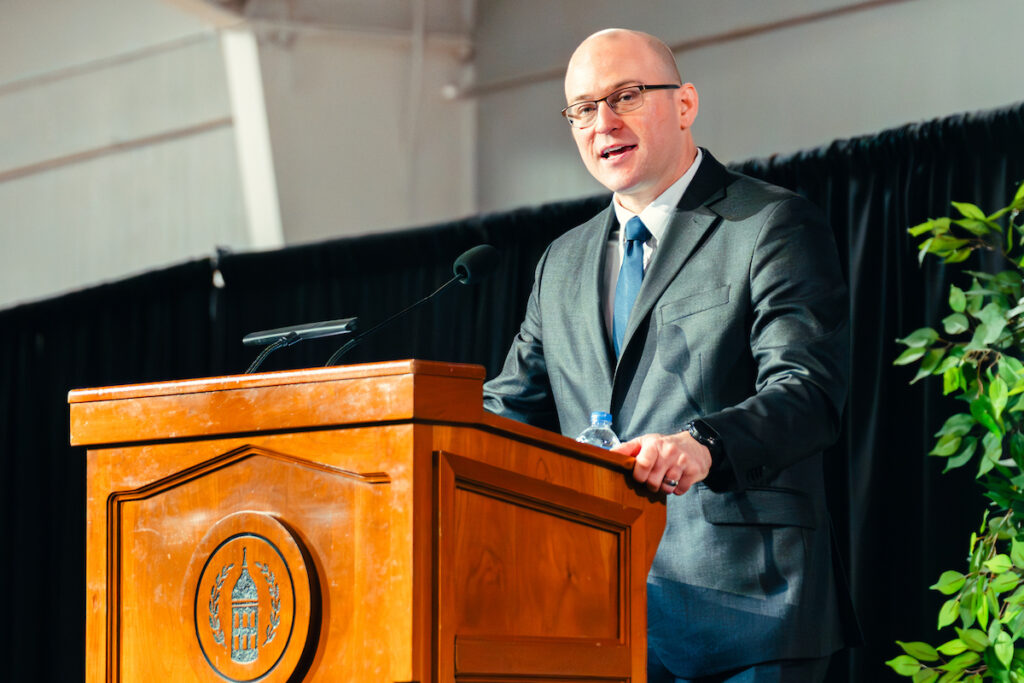
Dr. Jason Olson, director of deradicalization for the Board of Peace, addressed the Southern Virginia University community on April 3, sharing his deeply personal journey of honoring his Jewish heritage after his conversion to The Church of Jesus Christ of Latter-day Saints.
“Going through this painful journey, it’s like being between two mountains,” said Olson. “To my left stands Mount Sinai. It is wreathed in the smoke of antiquity echoing with the thunder of the law, the preservation of an indigenous identity, and the divine promise of an ancestral land. To my right stands the Hill Cumorah. It burst from the soil of the American continent, bathed in the light of modern revelation, echoing with the voice of a restored prophetic authority. I want to share how I learned that these two mountains do not stand in opposition.”
Growing up in the Jewish faith, Olson developed a deep respect for ancient prophetic authority. Over time, however, that reverence led him to a question he couldn’t ignore: if God spoke through prophets in ancient times, why would he stop speaking today?
In high school two Latter-day Saint friends gave him a copy of The Book of Mormon.Terrified that even possessing the book could be viewed as a betrayal of his faith and community, Olson hid the book in his backpack for months before deciding to burn it.
“At the moment of destruction, when I was holding a lighter in one hand and The Book of Mormon in the other hand, an overwhelming spiritual manifestation stopped me in my tracks,” said Olson. “I heard a still small voice say, ‘Do not burn my book.’ The flames that were meant to burn the paper instead burned my soul. I received a witness that the text was a sacred scripture.”
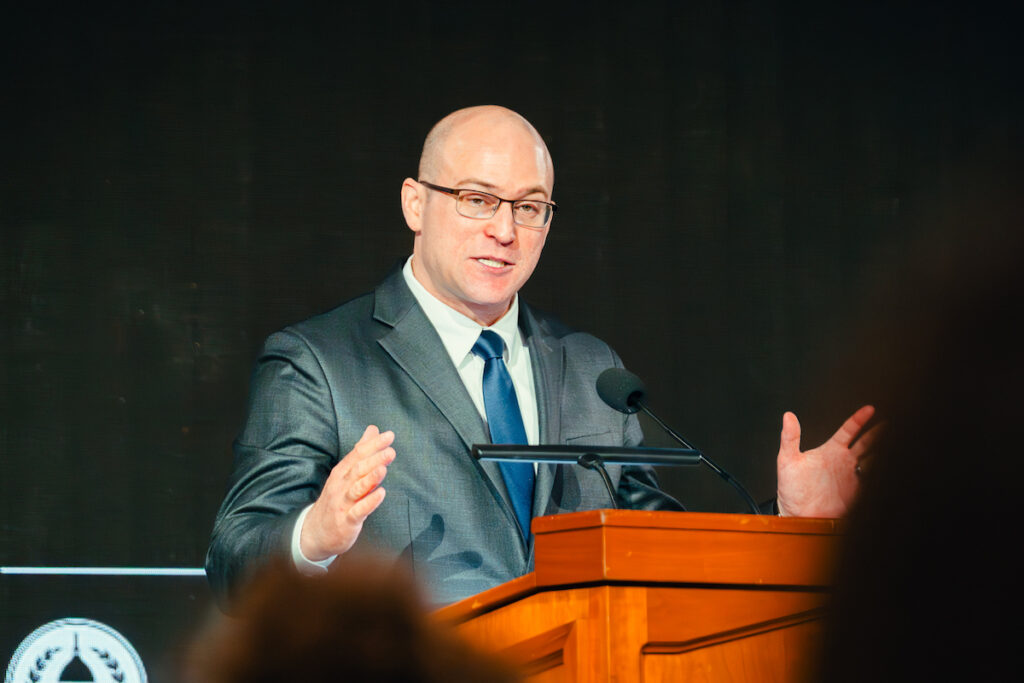
Rather than making a quick decision, Olson spent the next three years studying with a rabbi and wrestling with questions about Christ, covenant, and identity. He wanted to understand whether embracing Christianity meant abandoning the faith and heritage that shaped him.
While reading about the resurrected Savior’s appearance to the people in the Americas in The Book of Mormon, Olson received the answer he had been seeking and decided to join the Church. He emphasized that baptism did not wash away his Jewish identity but instead deepened his appreciation for it, providing a foundation in his spiritual journey and generating the empathy required to build bridges where there are differences.
The lessons Olson learned navigating questions of faith and identity would later influence a career devoted to service and understanding. His work has included military strategy, international diplomacy, and religious service, including assignments as a Marine regimental chaplain, the South Asia branch chief at the U.S. Pacific Fleet, and a key architect of trilateral missile defense operations in Korea.
“The conclusion to my lifelong journey is that these two covenants are not in competition,” said Olson. “They are fundamentally, beautifully, and eternally compatible. I have learned that one does not have to extinguish the fire of the eternal people to be warmed by the hearth of the eternal family.”
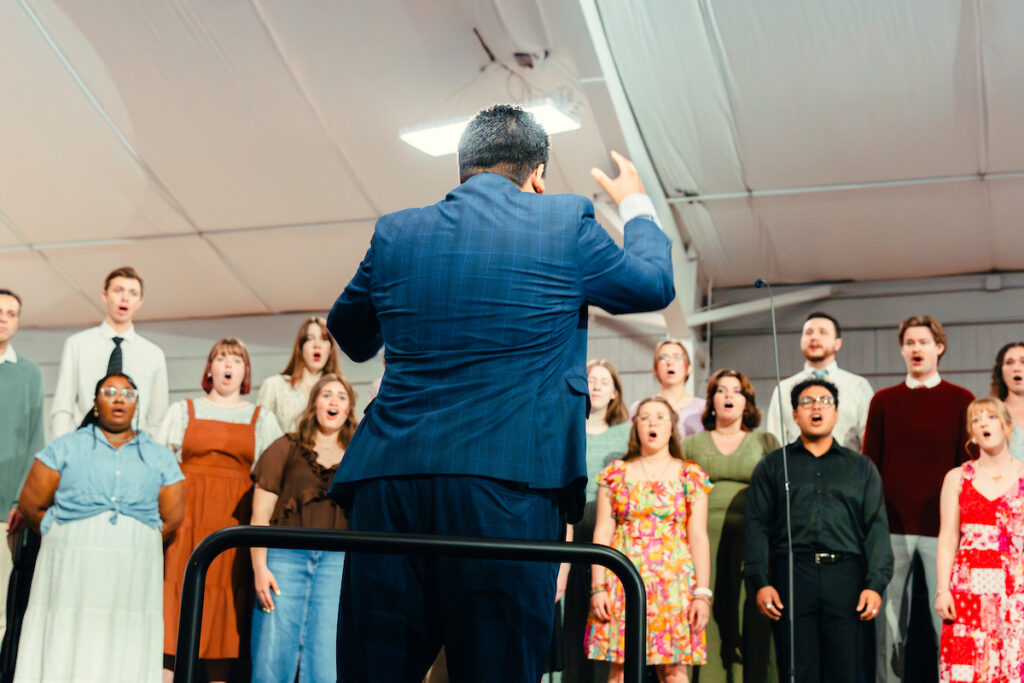
The SVU Chamber Singers opened the event by singing “The Lord’s Prayer,” and the audience concluded the forum with the traditional singing of “Love One Another.”